Affiliate disclosure: This page may contain affiliate links. We may earn a commission when you purchase through them, at no extra cost to you. This does not affect our editorial rating.Learn more.
The Last House Review
Netflix's number one movie of the week is also one of its worst-reviewed thrillers of the summer. We looked at why the critics soured, why viewers pressed play anyway, and who might still enjoy it.
By Alex Chen · Updated October 5, 2026
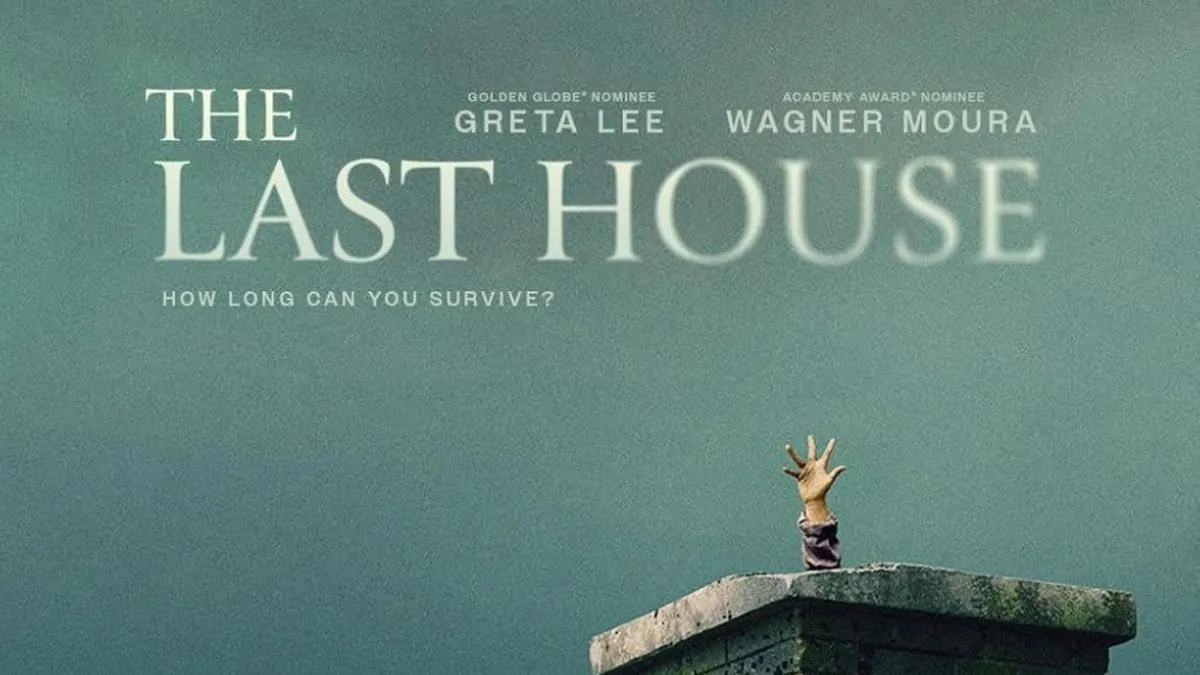
Should you buy it? No
- Critics and audiences are unusually aligned here, both rate it poorly (27% and 29% on Rotten Tomatoes when we first checked, with later snapshots in the low-to-mid 20s for critics), which is a stronger signal than either figure alone.
- The premise (family sealed inside their home) shifts into a creature-horror twist that reviewers found unearned rather than satisfying.
- Its massive viewership numbers reflect Netflix's reach and algorithm-driven discovery more than a broad recommendation on merit.
Pros
- + Greta Lee and Wagner Moura are accomplished actors (Golden Globe and Oscar nominees respectively) and reviewers say they carry the material
- + A 112-minute runtime that doesn't overstay its welcome
- + The first half, while the threat is still unknown, is where critics found it most effective
Cons
- − Rare case where critics and audiences agree it doesn't work, usually a stronger signal than a critic/audience split
- − The shift from survival-thriller premise to sci-fi horror reveal is reported as a tonal miscalculation rather than a satisfying twist
- − Critics describe it as two different stories that don't connect
Best for
- Viewers who enjoy popcorn thrillers regardless of critical reception
- People curious about the Netflix hit everyone is talking about
Not ideal for
- Viewers looking for a well-reviewed, critically respected sci-fi thriller
- Anyone who wants a self-contained ending
This review is labeled Researched. We haven’t watched the film ourselves. It’s built from Rotten Tomatoes critic and audience data, published reviews, parents’ guides and reporting on its streaming numbers. We keep spoilers to a minimum, and say clearly where we do reveal something. See How We Review for what that distinction means.
The short version
The Last House is a 112-minute sci-fi horror thriller from Netflix, released on August 7, 2026. It was written by Matthew Robinson and directed by Louis Leterrier, and stars Greta Lee and Wagner Moura as parents trying to keep their children safe when something impossible happens to their home. It was Netflix’s biggest film of its week, with Nielsen counting 838 million minutes viewed during the week of August 3 to 9, enough to rank fifth among all streaming titles that week.
It was also not well liked. Rotten Tomatoes critics were in the low-to-mid 20s when later snapshots were taken, and audiences were barely warmer. If you are deciding how to spend two hours tonight, that gap between “everyone is watching it” and “almost nobody is recommending it” is the most useful thing to understand about this movie.
What the movie is about
The setup is simple and, by most accounts, a good one. The Delgado family, made up of engineer father Jason (Wagner Moura), mother Ann (Greta Lee) and their two pre-teen children, Graham and Ruth, wake up during a heavy November rainstorm to find their midcentury home sealed shut by an unknown force. The same thing has happened across their neighbourhood, and mysterious silhouettes move through the rain outside.
From there, it is a survival story: how long can a family last when they cannot leave, supplies are running low, and no one knows what is outside? Reviewers compare the premise to Bird Box and A Quiet Place, and one critic noted that it works as a metaphor for lockdown, a “COVID metaphor” that runs neatly through most of the film.
What works: the cast and the first half
The consistent praise goes to the leads. Greta Lee, a Golden Globe nominee, and Wagner Moura, an Academy Award nominee, are the main reason several reviews are not harsher. A reviewer at PureWow described their performances as nuanced, while still wondering aloud what drew an actor of Lee’s calibre to the script.
The Hollywood Reporter’s headline frames the film as most effective while the threat remains unknown, and that is a common view. The early stretch relies on claustrophobia and uncertainty, and critics generally found that more gripping than what comes later. There is also a credit to the film for trying something different from the standard apocalyptic monster movie.
Where it falls apart
The Rotten Tomatoes critics consensus puts it bluntly: the film “drags a capable cast through an increasingly repetitive narrative without delivering the suspense or thematic depth its premise demands.” Several specific complaints show up in the reviews.
The tone shift. Many critics say it feels like two different stories that do not connect. One said the film follows its lockdown metaphor well until the final act, when it begins explaining things and “completely falls apart in spectacular fashion”. Another described the second-half pivot as something out of the M. Night Shyamalan playbook.
The monster reveal. Without giving away details, the creature design and the way the threat is explained were criticised by some reviewers as too goofy for the dark tone the film built. PureWow said the “action” was more bonkers than enjoyable.
Playing it safe. One critic noted that the script occasionally remembers to confront the darker side of what a family running low on resources might do to survive, then skitters back to safer ground. For a film about desperation, that is a real weakness.
An open ending. The film does not end neatly. Coverage notes it leaves the door open for sequels, which some viewers will find frustrating if they expected a full resolution.
Why did so many people watch it?
A film can be both a hit and a miss, and The Last House is a clear example. Netflix’s homepage puts new releases in front of millions of subscribers, autoplay does the rest, and the premise is easy to grasp in a thumbnail: a family trapped, strange shapes in the rain, two recognisable stars. A “view” counts when someone starts watching, not when they finish enjoying.
Reports of its first-days viewership have varied. One put it near 28 million views, and another listing counted it at 12 million views on Netflix’s English film chart for a given week. The figures differ because outlets measure different periods and charts. What does not vary is the direction: lots of attention, and low scores from both critics and audiences.
That combination is not unusual, but it means popularity here tells you almost nothing about whether you will like it.
A note on the scores
Rotten Tomatoes numbers move as more reviews come in, and different outlets have quoted different snapshots. When we first researched this page, the film held a 27% critics score and a 29% audience score. Later reports cite 22% from 81 critics with an average rating of 4.5 out of 10, or 24% from critics and 28% from audiences. We have kept our original figures in the summary above and note the range here so you can see that every snapshot points the same way.
Is it suitable for kids and teens?
The film is rated PG-13 for some violent content and terror, drug use, sexual references and brief language, according to parents’ guides. It is built on psychological tension and dread more than gore, though small animals become prey and there is some blood. Adults drink and, on one occasion, smoke marijuana, and the language is mild. The younger children in the story are in peril throughout, which may be intense for sensitive viewers. A mid-teen is probably fine, and a young child is probably not.
Who should watch it, and who should not
Watch it if you enjoy a high-concept “what is outside the door?” thriller and are happy to watch an uneven film for the cast. It is short enough to be low risk, and a lot of people enjoy discussing a movie that divides opinion. You may also want to watch just because everyone else did.
Skip it if you want a satisfying story with a clean ending, you dislike genre twists in the last act, or you are choosing from the Netflix catalogue on quality signals alone. In that case, there are better choices. For a list of recent options, see our guide to the best Netflix movies from summer 2026.
Our overall read matches the consensus: a promising premise, two committed leads, and a second half that most reviewers felt let them down. We rate it below average, with the acting as the clear high point.
If you want a different kind of film
For a film where critics and audiences disagreed sharply, read our Michael review. For better-reviewed streaming options, see our guide to the best Netflix movies from summer 2026.
FAQ
Is The Last House based on a true story? No, it’s an entirely original screenplay from writer Matthew Robinson and director Louis Leterrier, not based on real events.
Is The Last House connected to the 1970s film of a similar name? No, this is an unrelated original story, not a remake.
Is The Last House a horror movie or a sci-fi thriller? Coverage uses both labels. Wikipedia lists it as science fiction horror, Netflix’s own materials describe it as a sci-fi thriller, and reviews lean on its horror elements once the household’s threat escalates. It’s best understood as a sci-fi thriller with horror trappings.
How long is The Last House? 112 minutes, or just under two hours.
Where can I watch The Last House? It is a Netflix original that released on August 7, 2026, and it streams on Netflix with a subscription, including the ad-supported plan.
What is The Last House rated, and is it scary? It is rated PG-13 for violent content and terror, drug use, sexual references and brief language. Parents’ guides describe the fear as mostly psychological and claustrophobic, with some blood but no heavy gore.
Does The Last House have a sequel or an open ending? The film does not wrap up neatly, and coverage notes it leaves the door open for a sequel. We have not found an official sequel announcement.
Why is The Last House so popular if the reviews are bad? Netflix puts new releases front and centre, and a view counts when someone starts watching. Nielsen counted 838 million minutes viewed in its first full week, which made it Netflix’s top film that week, even as critics and audiences both rated it poorly.
Sources: Wikipedia — The Last House, Reelgood — The Last House (2026), Netflix Tudum — The Last House release details, MovieWeb — The Last House viewership figures, Variety — The Last House review, Rotten Tomatoes — The Last House, PureWow — The Last House review, CBR — The Last House Nielsen numbers, MovieWeb — The Last House Rotten Tomatoes score, Cineparenting — The Last House parents guide, JoBlo — The Last House review
Related reviews
Michael Review
7.4/10
The first biopic to pass $1 billion at the box office is also a film critics call sanitized. Here is what is on screen, what was left out and why, and who will enjoy it.
By Alex Chen · Updated Oct 2026