Affiliate disclosure: This page may contain affiliate links. We may earn a commission when you purchase through them, at no extra cost to you. This does not affect our editorial rating.Learn more.
Pragmata Review
Critics love the way Pragmata makes you shoot and hack at the same time, and split on its father-daughter story. Here is what the reviews, the sales numbers and the player counts say before you spend $59.
By Alex Chen · Updated October 5, 2026
$59 · checked Aug 26, 2026
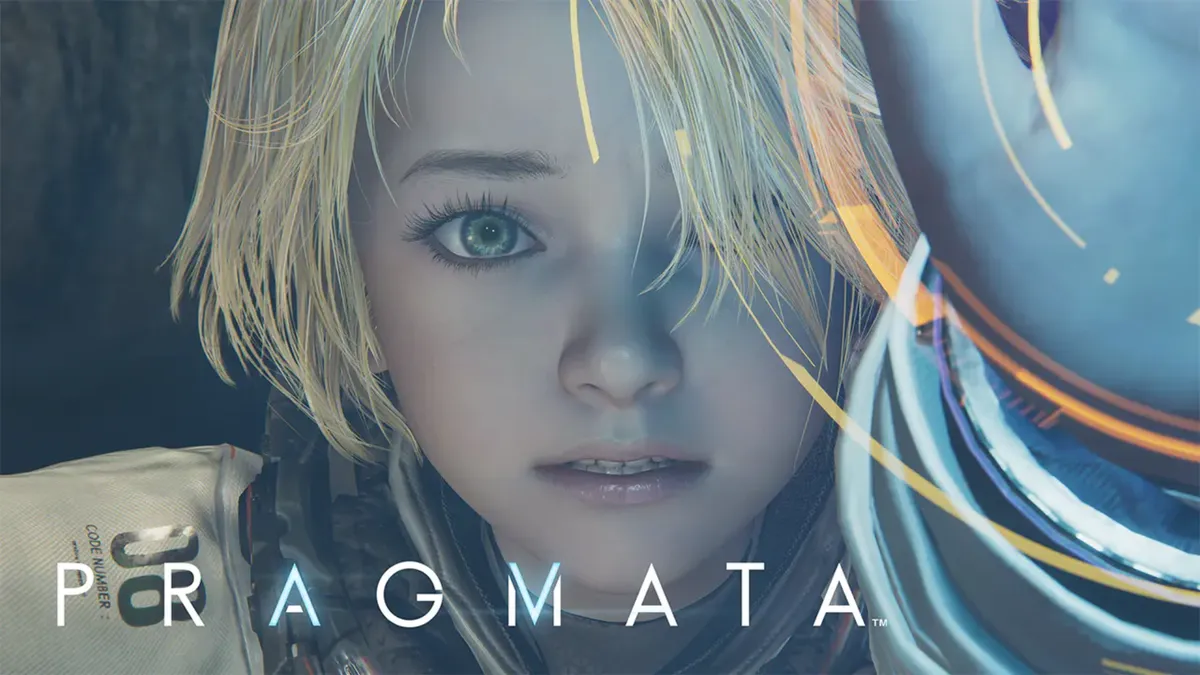
Should you buy it? Yes
- It carries an 86 Metacritic score at launch (85 to 89 depending on platform) and 97% positive Steam user reviews, a rare combination of critical and player agreement.
- The hacking-while-shooting combat is described as a real mechanical innovation, not a reskin of existing genre conventions.
- At $59, it's priced below the $69.99 AAA standard, which is a real value signal on top of the reception.
Pros
- + 86 Metacritic score at launch alongside 97% positive Steam reviews, unusually strong critical and player alignment
- + Real-time hacking minigames that run alongside the gunplay, praised as original rather than derivative
- + Boss fights singled out as a highlight by multiple critics
- + Priced at $59 / £49, below typical current-gen AAA pricing
Cons
- − The story is the most divisive part, with some critics finding the father-daughter bond warm and others finding it unearned and Diana grating
- − Enemy variety thins out late in the 10 to 12 hour campaign
- − Steam concurrent player counts were modest next to the sales, which matters if you want a busy community (it is single-player anyway)
Best for
- Players who want genuine mechanical innovation over a familiar franchise formula
- People who like a short, focused, linear campaign they can finish in a week
Not ideal for
- Players who strictly prefer established franchises over new IP
- Anyone who needs a deep, sprawling story or an open world
This review is labeled Researched. We have not played the game ourselves. It is built from published critic reviews, review aggregators, sales reporting and system-requirement and guide coverage, and we point out where outlets disagree. See How We Review for what that distinction means.
The pitch in one breath
You are a spacefarer called Hugh Williams, stuck on a lunar research station after a disaster. You find a young android called Diana. The station’s robots are hostile, and the two of you need to reach Earth. That is the whole setup, and it is told with a lot more warmth than the premise suggests.
What makes Pragmata worth a closer look is that the way you fight is genuinely unusual. Hugh carries the guns, but his Earth-made weapons cannot pierce the shells of the moon’s robots. Diana has to hack each enemy first to open up a weak spot, and she does that through a real-time puzzle on a grid. You steer a cursor across the grid with the face buttons, collecting nodes that boost damage and dodging hazards, while Hugh is still dodging incoming fire. Link the nodes, expose the weak spot, then shoot. You are doing both at once.
If that sounds like patting your head and rubbing your stomach, that is roughly how critics describe the first hour. Then it clicks.
The moment it clicks
Several reviewers mention a learning curve followed by a “flow state”. Kotaku’s reviewer describes the first stretch as slow, because the game is introducing its systems one at a time, and then talks about a point where the hacking and shooting merge into one rhythm. PCGamesN calls the dual-control idea “simple but ingenious”, and notes that neither half of the system overwhelms the other.
There are some practical details that help to see why it works. Hugh’s arsenal runs from a pistol and an assault rifle to a shotgun, a rocket launcher and tactical gear such as a decoy gun, and ammo is limited, so you are encouraged to switch weapons regularly instead of holding one trigger. Diana’s hacks can build heat, which you can pair with a high-powered finishing shot. Gunplay alone is not enough to win; the game wants you to use both characters together.
Upgrades come at a steady pace, which keeps progression feeling rewarding. At the Shelter, the base you keep returning to, there are two main terminals. The Firmware Updater spends Upgrade Components on Hugh’s suit, his primary pistol and Diana’s hacking. The Unit Printer handles gear. Community guides suggest putting early upgrades into Diana’s hacking, because it raises damage and lengthens the window in which an enemy’s weak point is exposed, then into Hugh’s suit for the boss fights.
The bosses are the part people remember
PCGamesN calls the boss fights “phenomenal” and picks out a mid-game scorpion-like robot encounter in particular. Each fight introduces new tactical options and a different arena, which matters in a game that is otherwise built around a single core loop. If a combat system is a clever idea, bosses are where a developer proves it can carry the full weight of a game, and this is where reviewers say Pragmata delivers.
Where the reviews split: the story
This is the most interesting disagreement, and it is useful to know before you buy because it comes down to taste.
Kotaku loved the story. The reviewer calls the Hugh and Diana bond the game’s heartbeat, says it avoids the usual “angry video game dad” trope, and says Hugh never treats Diana as a burden. The review calls the result “a dad game for dads who actually like their children”. They admit it can be saccharine if you do not like media that wears its heart on its sleeve.
PCGamesN gave an 8 out of 10 for the gameplay, but said the story falls flat. That reviewer found Hugh forgettable, Diana’s voice annoying, and the father-daughter bond forced and unearned. Another critic describes the plot as undercooked, and notes Hugh’s motivation feels inconsistent at times.
How should you read that? If you buy games mainly for the moment-to-moment mechanics, the story question probably will not change your decision, because the same critics who disliked the writing still scored the game highly. If you are the sort of player who needs a story to carry you through, try the demo first.
What critics found repetitive
The campaign is short by modern standards. It runs roughly 10 to 12 hours on standard difficulty, or 12 to 15 hours if you explore. A completionist run, with all 184 sector collectibles, Shelter rewards and training sims, comes to about 15 to 20 hours, and full completion across two playthroughs runs about 28 to 30 hours.
Some reviewers say the gameplay loop becomes slightly predictable near the end, with many of the same robot types. That is a fair trade-off for a tight, linear game: you finish before the idea wears out, but you do notice the repeated enemies in the last stretch.
After the credits
Post-game content is better than you might expect for a story-led game. New Game+ carries over your weapons, upgrades, hacking nodes, abilities, outfits, attachments and mods. You also unlock a harder Lunatic difficulty, which makes enemies stronger but offers new weapon upgrades. A post-campaign mode called Unknown Signal adds extra Sim Pod challenges in a hidden chamber, with special weapons and outfits as rewards, and finishing everything at 100% collectibles unlocks an extended ending.
The numbers: critics, players and sales
Here is how the numbers stack up, as reported at the time of writing.
- Metacritic: Scores vary by platform: 89 on Switch 2, 88 on PC, 87 on Xbox Series X|S and 85 on PS5. The 86 figure we used at launch fits inside that range.
- OpenCritic: Rated “Mighty”, with 96% of 219 critics recommending it.
- Steam: “Overwhelmingly Positive”, with 97% positive user reviews.
- Sales: Over 1 million copies in two days, over 2 million within 16 days and over 2.5 million by July 2026.
There is one more figure worth knowing. Steam concurrent player counts peaked at just over 55,000 on launch day, which is modest next to the sales and the review scores. One report headlined this as “glowing reviews and chart-topping sales but mediocre player counts”. For a single-player game that is not a problem, since you are not relying on a busy community, but it tells you the game is a critical hit more than a cultural phenomenon.
Why it matters that this is a new idea
Pragmata was first revealed in June 2020 during Sony’s PS5 reveal event, and was Capcom’s first original IP in eight years. It slipped from 2022 to 2023, was then delayed indefinitely in June 2023, and eventually landed on April 17, 2026. Its director, Cho Yong-hee, has said the team went through extensive trial and error, especially around the puzzle hacking, and the game runs on Capcom’s RE Engine.
That backstory is relevant because a six-year development for an unproven idea is a big risk. The critics’ reaction suggests it paid off: coverage describes it as proof that there is still room for invention in AAA games.
Price, platforms and PC requirements
Pragmata costs $59 in the US and £49 in the UK, which is below the $69.99 that has become standard for big current-generation releases. It released on April 17, 2026 on PC, PS5 and Xbox Series X|S. Wikipedia lists a Switch 2 release date of April 24 in Japan, while other coverage describes the Switch 2 version as part of the launch lineup, so check your region’s store listing. One pre-order listing showed a lower PC price of $50, but we have kept the $59 figure used elsewhere on this site until that is confirmed.
For PC, the published minimum specification is an Intel Core i5-8500 or AMD Ryzen 5 3500, an NVIDIA GTX 1660 (6 GB) or Radeon RX 5500 XT (8 GB), 16 GB of RAM, Windows 11 and 40 GB of SSD storage, which gives about 45 fps at 1080p on the Performance preset. The recommended specification is a Core i7-8700 or Ryzen 5 5500 with an RTX 2060 Super or RX 6600 and 16 GB of RAM, aimed at about 60 fps at 1080p on Balanced. Ray tracing needs an RX 6700 XT or an RTX 3060 12 GB.
Our take: who should buy it
Buy it if you like third-person shooters and want one that does something you have not done before, you prefer a tight 10 to 12 hour campaign to a 60-hour sprawl, and you value mechanics over narrative. The agreement between critics and players is rare.
Try the demo first if you are not sure the story will work for you. There is a free demo on PS5, Xbox Series X|S and Switch 2, and a Steam demo was also released.
Skip it if you want multiplayer, an open world or deep role-playing systems. None of those are here.
Where it sits among this year’s games
Pragmata is the most mechanically inventive of the games we have covered recently. If you want a stealth-led story game with a famous licence, read our 007 First Light review. If you would rather look ahead, our Gears of War: E-Day review and Fable preview cover what is coming next.
FAQ
How long is Pragmata? Roughly 10 to 12 hours for the main campaign on standard difficulty, or 12 to 15 hours if you explore. A completionist run takes 15 to 20 hours, and about 28 to 30 hours covers full completion across two playthroughs.
Does Pragmata have multiplayer or co-op? No, it’s entirely single-player. The dual-character system, controlling both Hugh and the android Diana at once, runs within one player’s session rather than co-op.
Is Pragmata connected to any other Capcom franchise? No, it’s an entirely new IP, not connected to Resident Evil, Monster Hunter, or Capcom’s other established series.
Is there a Pragmata demo? Yes. A free demo is available on PlayStation 5, Xbox Series X|S and Nintendo Switch 2, and a Steam demo was released as well, so you can try the hacking-and-shooting combat before paying.
Does Pragmata have New Game+? Yes. New Game+ carries over your weapons, upgrades, hacking nodes, abilities, outfits, attachments and mods, and you can pair it with the Lunatic difficulty setting that unlocks after your first completion.
What are the PC system requirements for Pragmata? The minimum is a Core i5-8500 or Ryzen 5 3500, a GTX 1660 6 GB or RX 5500 XT 8 GB, 16 GB of RAM and 40 GB of SSD space. The recommended is a Core i7-8700 or Ryzen 5 5500 with an RTX 2060 Super or RX 6600.
What platforms is Pragmata on and when did it release? It released on April 17, 2026 for PlayStation 5, PC and Xbox Series X|S, with a Nintendo Switch 2 version also available.
Sources: TechRadar — Pragmata demo on Nintendo Switch 2, Insider Gaming — How long to beat Pragmata, Tom’s Guide — Pragmata review, Wikipedia — Pragmata, GamesRadar+ — Pragmata: Everything you need to know, Kotaku — Pragmata review, PCGamesN — Pragmata review, OpenCritic — Pragmata, TechPowerUp — Pragmata launch reviews and player counts, 80.lv — Pragmata sold 1M copies, Dot Esports — Pragmata PC system requirements, PC Gamer — Pragmata guide
Related reviews
007 First Light Review
8.4/10
Critics call it the best Bond game since GoldenEye. We read the reviews, the technical reports and the complaints to work out who should pay $69.99, and who should wait.
By Alex Chen · Updated Oct 2026
Gears of War: E-Day Review
8.6/10
Critics call Gears of War: E-Day the franchise's best-reviewed entry in a decade. We read the reviews, the technical reports and the complaints to find out what is great, what drags and who should play it on Game Pass.
By Alex Chen · Updated Oct 2026