Affiliate disclosure: This page may contain affiliate links. We may earn a commission when you purchase through them, at no extra cost to you. This does not affect our editorial rating.Learn more.
iPhone 17 Pro Review
The iPhone 17 Pro has a brilliant camera and Apple's best battery life, but it is now last year's Pro. Here is what reviewers found, where it falls short, and whether it still makes sense to buy after the iPhone 18 Pro launch.
By Alex Chen · Updated October 5, 2026
$1,099 · checked Aug 26, 2026
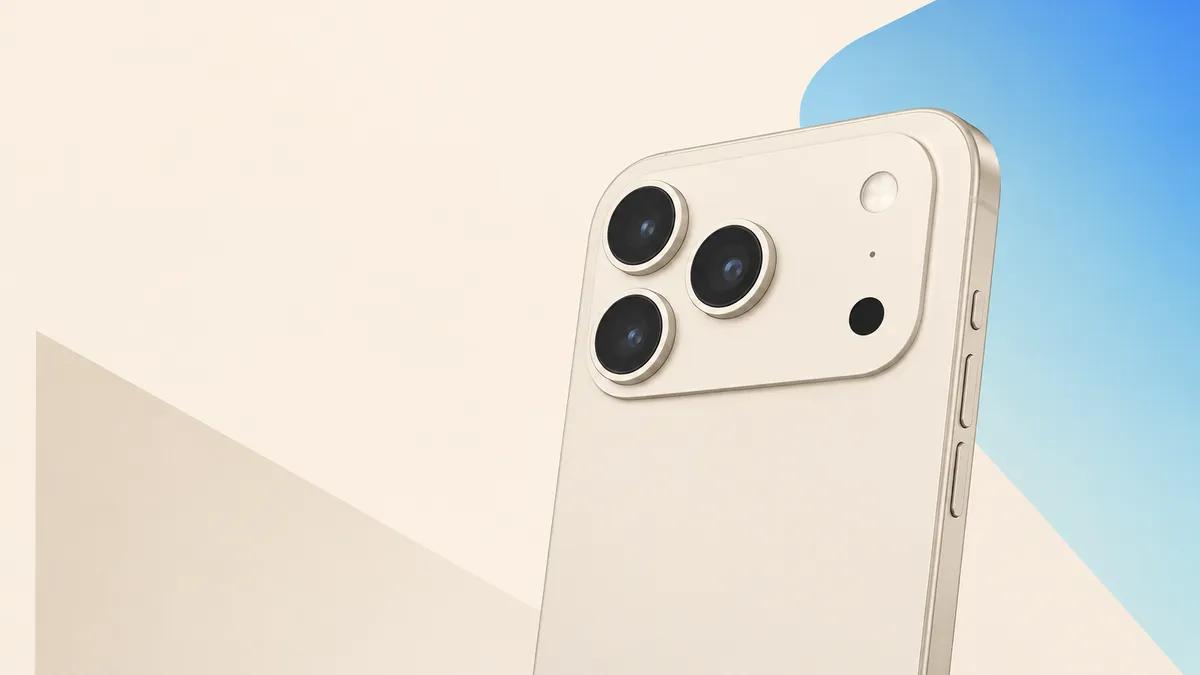
Should you buy it? It depends
- You want the most versatile zoom range Apple has shipped, from ultrawide to 8x optical-quality telephoto.
- You value long-term software support and resale value over raw spec-sheet numbers.
- You can find it at a real discount, now that the iPhone 18 Pro has launched.
Pros
- + All three rear lenses are now 48MP, closing the gap between main and secondary cameras
- + Vapor chamber cooling keeps the A19 Pro from throttling under sustained load
- + Best battery life of any iPhone to date at launch (up to 33 hours of video playback)
- + IP68 rating and a 3,000-nit display that stays legible in sunlight
Cons
- − Starts at $1,099 for 256GB, with no 128GB option to lower the entry price
- − Aluminium is softer than the titanium it replaced, and the camera plateau is a reported scratch spot
- − Reviewers argue the standard iPhone 17 is such good value that the Pro is a harder sell
- − It has been succeeded by the iPhone 18 Pro, and Apple has reportedly stopped selling it directly
Best for
- Photography-focused buyers who want one camera system that handles every focal length
- Apple ecosystem users who prioritise software support longevity and can find a discount
Not ideal for
- Buyers who want the fastest possible wired charging
- Anyone who wants the latest chip and the newest camera hardware
This review is labeled Researched. We have not tested the phone ourselves. It is built from Apple’s published specifications and from the tests and reviews of outlets that did, including Tech Advisor, TechRadar, T3, MacRumors and Notebookcheck, and we point out where sources disagree. See How We Review for what that distinction means.
First, a timing note
Our original version of this review treated the iPhone 17 Pro as Apple’s current flagship. That is no longer true. Apple announced the iPhone 18 Pro on September 9, 2026, starting at $1,199, a $100 increase over the 17 Pro’s launch price. Reports say the iPhone 17 Pro and Pro Max were removed from Apple’s own lineup when the new phones arrived, although some carriers and retailers still have stock and are discounting it.
That changes the question. It is no longer “should I buy the best iPhone?” but “is last year’s Pro a smart purchase now?” The rest of this review answers that, with the 18 Pro as the reference point.
What the iPhone 17 Pro got right
A camera system with no weak link
The headline upgrade is that all three rear cameras are 48MP sensors. In earlier Pros, the telephoto and ultrawide lagged the main camera in resolution. Now the telephoto sensor is about 56% larger and delivers 8x optical zoom at 200mm, the longest on any iPhone, up from 5x on the 16 Pro. Apple quotes a combined 16x optical-quality zoom range. Reviewers say the 8x lens produces brilliant shots of landmarks and other still subjects. Tech Advisor describes the triple setup as “several steps ahead” of the regular iPhone 17, with excellent colour accuracy and detail in all lighting, and praised the 18MP front camera with Center Stage, which lets you take portrait and landscape selfies without rotating the phone.
Cooling that actually matters
For the first time in an iPhone, there is an Apple-designed vapor chamber, with deionised water in a sealed, laser-welded chamber. Apple moved the frame to aluminium, which conducts heat much better than titanium and is lighter, and combined it with the vapor chamber to sustain performance. The A19 Pro delivers about 20% faster CPU performance than the 16 Pro. Independent tests support the claim: one stress-test report found the 17 Pro Max holding about 81% of its initial performance after 20 minutes, compared with a 65% stability score on the 16 Pro Max, and a demanding game, Resident Evil 4, ran at 60 FPS without rapid throttling. We have not run the test ourselves, and some Indian repair-shop blogs report warmth during 4K recording and in 40°C+ heat, so expect some warmth in extreme conditions.
Battery
Apple quotes up to 33 hours of video playback, its longest figure for a non-Max iPhone at the time (some Indian listings still show an older 31-hour figure). In real use, Tech Advisor reported finishing typical days from 6am to midnight with over 20% remaining. Charging is rated at 50% in 20 minutes with a 40W adapter (sold separately), and MagSafe wireless charging tops out at 25W. Both trail the fastest charging on some Android flagships.
The display
The 6.3-inch OLED runs ProMotion up to 120Hz with a quoted 3,000-nit peak brightness and Ceramic Shield 2 glass with an anti-reflective coating. TechRadar’s reviewer wrote that Ceramic Shield 2 is the first iPhone glass they fully trust, and Apple says it has three times better scratch resistance than before.
The compromises
Durability: good glass, soft frame
The scratch story is more nuanced than social media suggested. Tests found the glass front resists scratches well, showing only light marks at level 7 on the Mohs scale, where scratches usually appear at 5 or 6. A Cosmic Orange unit tested showed cosmetic marks wiped away with a microfiber cloth after a week of pocket carry. But MacRumors reported a real weak spot: the camera plateau has a sharp, raised edge that is not chamfered, and the anodised layer there adheres poorly. Carrying the phone without a case risks scratching the camera island, because aluminium is much softer than titanium. Tech Advisor also noted some users reported discolouration on the orange model. A case solves most of this.
Design opinions are mixed
Tech Advisor calls the design “divisive”, and notes it is heavier than the iPhone Air and the standard iPhone 17. It comes in Silver, Deep Blue and Cosmic Orange, with no black. Taste matters here, so it is worth seeing one in person.
The regular iPhone 17 problem
The sharpest criticism in Tech Advisor’s review is this: “The biggest problem the iPhone 17 Pro has is how brilliant the regular iPhone 17 is.” The standard model matches the Pro’s display brightness, and the $300 difference makes it better value for most people. The Pro’s remaining advantages are the triple camera system and the vapor chamber, both Pro-tier exclusives this generation.
Where it stands against the iPhone 18 Pro
The iPhone 18 Pro, as covered by 9to5Mac, brings a faster A20 Pro chip (reported 22 to 27% faster CPU and 40 to 45% faster GPU than the A19 Pro), a variable-aperture 48MP main camera, a redesigned vapor chamber with three times the surface area, a Dynamic Island around 25% smaller and modestly better battery life, between 30 minutes and two hours more. It is also heavier at 211g. The reviewer’s verdict: upgrading from a 17 Pro is unnecessary, but owners of a 16 Pro or older should consider the jump.
That is useful in two ways. If you already own a 17 Pro, you can skip the 18 Pro without feeling you missed out. If you are shopping, the 17 Pro is now a value pick, as long as the discount is meaningful.
Price: what to expect
At launch, the 17 Pro cost $1,099 for 256GB with no 128GB option. In India, our comparison page lists the official launch price as ₹1,34,900 for the 256GB model, while some listing sites show street prices as low as about ₹1,28,490, so compare before buying. After the 18 Pro launch, Apple also reportedly raised prices across its lineup, and reports say the discounting window on the 17 Pro is closing as retailers sell through remaining stock. A refurbished 17 Pro was reported as expensive in September. Our advice: buy only if you can get a clear saving over the 18 Pro’s $1,199 starting price, since otherwise the newer phone is the better long-term choice.
Who should buy it, and who should skip
Buy it if you want a great camera and strong battery life, you are in the Apple ecosystem, and you find a discount of a couple of hundred dollars or more. Its software support window remains one of the longest in the industry.
Skip it if you want the newest chip, the variable-aperture camera or the smaller Dynamic Island, if you own a 16 Pro and have no specific complaints, or if you want a large screen or a stylus. For those, see our Galaxy S26 Ultra review and our iPhone 17 Pro vs Galaxy S26 Ultra comparison.
More phone guides
For the wider picture, see our best phones to buy in 2026 guide. If you want a far cheaper phone with long software support, read our Pixel 9a review, or see our best phones under ₹30,000 in India.
FAQ
Is the iPhone 17 Pro worth upgrading from an iPhone 16 Pro? The gains are real but modest rather than dramatic: Apple quotes 33 hours of video playback versus 27 on the 16 Pro, wired charging jumps from 20W to 40W, and the telephoto lens moves from 12MP to 48MP. If you’re not bottlenecked by charging speed or telephoto detail specifically, there’s less reason to upgrade than the 16→17 non-Pro jump.
Why did Apple switch the frame back from titanium to aluminum? Primarily heat dissipation and weight, not cost-cutting alone, aluminum conducts heat dramatically better than titanium, which pairs with the new vapor chamber to sustain performance under load, and it’s lighter. The trade-off is that titanium had better scratch resistance.
Does the iPhone 17 Pro support satellite connectivity? Yes, Emergency SOS via Satellite is supported, including sharing your Medical ID, location, and battery level with responders when you’re outside cellular and Wi-Fi range; check Apple’s current feature list for your specific region and carrier, since satellite availability varies.
Is there a non-Pro 17 with the same camera system? No, per Apple’s published lineup, the triple 48MP camera system and vapor chamber cooling are Pro-tier exclusives this generation.
Is the iPhone 17 Pro worth buying? For most people already on iPhone who want the best camera and battery Apple offered in a compact body, yes, especially at a discount. It’s harder to justify if you’re happy with an iPhone 16 Pro, want the fastest wired charging, or would rather pay for the newer iPhone 18 Pro. See the verdict box above for who should buy and skip.
Does the iPhone 17 Pro overheat during gaming? Independent testing suggests it handles sustained load better than its predecessors. One stress-test report found the iPhone 17 Pro Max holding about 81% of its initial performance after 20 minutes, versus a 65% stability score on the 16 Pro Max, and AAA games such as Resident Evil 4 ran at 60 FPS without rapid throttling. We haven’t run this test ourselves. Some Indian repair-shop blogs report warmth during 4K recording and in 40°C+ heat, so expect some warmth in extreme conditions.
Does the iPhone 17 Pro support 5G in India? Yes. Retail listings show a wide 5G band list covering the bands used by Indian networks, including n1, n3, n5, n8, n28, n40, n78 and n41. Confirm your carrier’s bands and plan against Apple’s regional spec sheet before buying, since Apple builds regional model variants.
How is the iPhone 17 Pro battery life? Apple quotes up to 33 hours of video playback, its longest for a non-Max iPhone at the time (some Indian listings still show an older 31-hour figure). Real-world battery life depends heavily on screen brightness, 5G signal strength and heat, so treat the quoted number as a best case rather than an everyday expectation.
Does the iPhone 17 Pro scratch easily? The glass front is reported to resist scratches well, but the aluminium frame is softer than titanium, and MacRumors reported the camera plateau’s raised edge as a weak spot. Using a case helps.
Should I wait for or buy the iPhone 18 Pro instead? The iPhone 18 Pro started at $1,199 and brings a faster chip and a variable-aperture camera. 9to5Mac’s reviewer says 17 Pro owners do not need to upgrade, but 16 Pro owners or older should consider it. If you can find a 17 Pro at a big discount, it remains a good buy.
iPhone 17 Pro vs Samsung Galaxy S26 Ultra: which is better? It mostly comes down to ecosystem. The S26 Ultra has a bigger 6.9-inch screen, an S Pen, a 5x telephoto lens and Privacy Display, while the iPhone 17 Pro is smaller, keeps performance steadier under sustained load, and has the stronger front camera. Our full iPhone 17 Pro vs Galaxy S26 Ultra comparison has the row-by-row detail.
Sources: Macworld — iPhone 17 Pro vs 16 Pro, Mac Observer — iPhone 17 Pro vapor chamber tested, Notebookcheck — iPhone 17 Pro Max AAA gaming test, Smartprix — iPhone 17 Pro India specs, TechRadar — iPhone 17 Pro Max vs Galaxy S26 Ultra, Cashify — iPhone 17 Pro overheating, Apple — iPhone 17 Pro technical specifications, MacRumors — iPhone 17 Pro roundup, MacRumors — iPhone 17 Pro ditches titanium, Apple Support — Connect to a satellite with your iPhone, Tech Advisor — iPhone 17 Pro review, MacRumors — iPhone 17 Pro scratch test, TechRadar — Ceramic Shield 2, 9to5Mac — iPhone 18 Pro review, GSMArena — iPhone 18 Pros launch and refurbished 17 Pros, Forbes — iPhone 17 discounts after Apple’s price rise
Related reviews
Google Pixel 9a Review
8.0/10
The Pixel 9a is a battery-and-longevity phone first and a camera phone second. We compared what the major reviewers found, where they disagree, and when the price makes it a smart buy.
By Alex Chen · Updated Oct 2026
Samsung Galaxy S26 Ultra Review
9.0/10
The S26 Ultra has the fastest Android chip, the first built-in Privacy Display and seven years of updates. It also costs a lot, weighs a lot, and trades something for that privacy screen. Here is what the testers found.
By Alex Chen · Updated Oct 2026