Affiliate disclosure: This page may contain affiliate links. We may earn a commission when you purchase through them, at no extra cost to you. This does not affect our editorial rating.Learn more.
Samsung Galaxy S26 Ultra Review
The S26 Ultra has the fastest Android chip, the first built-in Privacy Display and seven years of updates. It also costs a lot, weighs a lot, and trades something for that privacy screen. Here is what the testers found.
By Alex Chen · Updated October 5, 2026
$1,300 · checked Aug 26, 2026
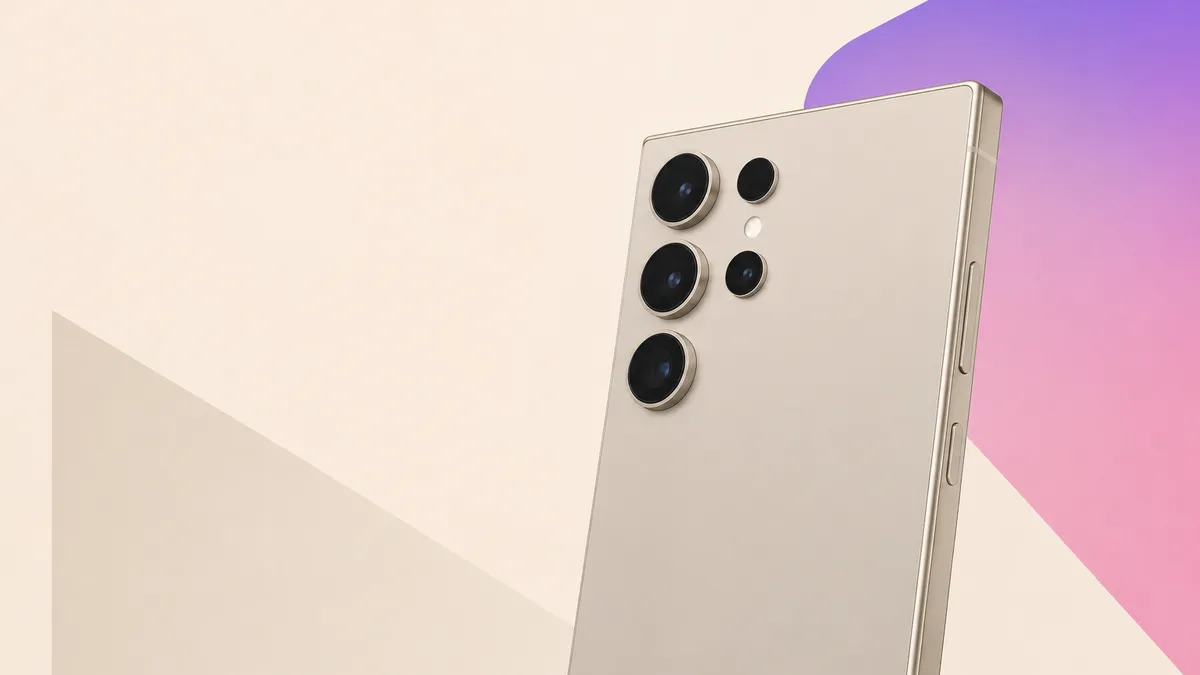
Should you buy it? It depends
- You want the fastest Android chipset currently shipping (Snapdragon 8 Elite Gen 5, 3nm).
- You often use your phone in public and want the new hardware-level Privacy Display.
- You want the S Pen built in without carrying a separate case or stylus.
Pros
- + Longest software commitment Samsung has offered, 7 major OS upgrades and 7 years of security updates
- + Privacy Display is a genuine hardware first, not a software gimmick, and reviewers say it works as advertised
- + 60W wired charging (75% in 30 minutes) is a real step up from the prior generation's 45W
- + Real-world battery life is excellent, with roughly a day and a half reported by one reviewer
Cons
- − 214g weight is noticeably heavier than most rivals, including the iPhone 17 Pro
- − Starting price of $1,299.99 for 256GB puts real pressure on the value case
- − Lab tests found the screen slightly dimmer than the S25 Ultra, and the S Pen lost Bluetooth features
- − Camera is capable but not class-leading, with a weak 3x telephoto in at least one review
Best for
- Buyers who want the S Pen and a stylus-first workflow built into the phone
- Anyone prioritising display tech, performance and long-term software updates over weight
Not ideal for
- Buyers who want the lightest possible flagship
- Anyone on a tight budget, since this is priced at the very top of the market
This review is labeled Researched. We have not tested the phone ourselves. It is built from Samsung’s published specifications and from the lab tests and reviews of outlets that did test it, including Tom’s Guide, Digital Camera World, PhoneArena and Pocket-lint. We say where they disagree. See How We Review.
The one-line summary
One reviewer summed up the S26 Ultra as “a 9/10 phone with an 8/10 camera”, and that is a fair way to think about it. This is the best Android phone you can buy for raw power, display technology and software support, and it comes with a price that makes you ask whether you need all of it.
Privacy Display: the headline feature, and its trade-offs
Samsung’s big new idea is a display that can hide itself from people looking over your shoulder. It is built into the panel using Samsung’s Flex Magic Pixel technology, which controls light direction at the pixel level. When Privacy Display is active, only narrow-angle pixels are lit, restricting the viewing angle, while you still see the screen head-on. You can toggle it from Quick Settings or set it to switch on automatically for specific apps, such as banking or messaging, which is the more useful way to use it on a commute or in a café.
Reviewers found it works as advertised, and goes beyond what you would expect from a first-generation feature. But it is not free:
- Brightness. Samsung says forward-facing brightness is unchanged. Tom’s Guide’s lab tests tell a slightly different story: the S26 Ultra reached a peak of 1,806 nits with HDR content versus 1,860 for the S25 Ultra, even with Privacy Display off, and the testers noted the difference was clearer at wider viewing angles. With the maximum privacy setting on, brightness drops to 586 nits from 1,209 nits with adaptive brightness. The peak-nits gap is small, “almost imperceptible to the eye” in the test’s own words, but it shows the privacy hardware has a cost.
- Battery. Tom’s Guide measured only about a 16-minute drop on a phone that lasted over 15 hours, within normal variation.
- Angles. Samsung confirmed there is some variation in display quality at different angles even with Privacy Display off.
We have kept our earlier statement that the feature does not affect your head-on view, and flagged the lab-test findings above as the conflicting evidence. If you spend lots of time in bright sunlight or watch video with a friend beside you, check this in a store.
Design: heavy, but well built
The S26 Ultra keeps Samsung’s boxy design: an aluminium frame, Corning Gorilla Armor 2 on the front and Gorilla Glass Victus 2 on the back. At 214g it is noticeably heavier than most competing flagships, including the iPhone 17 Pro’s 206g. If you carry your phone in one hand for hours, that matters.
The display is a 6.9-inch LTPO AMOLED panel running up to 120Hz at WQHD+ resolution, with the Privacy Display layered on top.
Performance: the fastest Android chip
The phone uses the Snapdragon 8 Elite Gen 5 for Galaxy, built on a 3nm process, with 12GB or 16GB of LPDDR5X RAM and UFS 4.0 storage. On paper and in reviews, it is the fastest Android processor available. We have not benchmarked it ourselves, and most testers describe it as faster than almost any user will ever need.
Camera: strong, with a weak spot
The quad rear system has a 200MP main sensor, a 50MP ultrawide, a 50MP periscope (5x optical zoom) and a 10MP telephoto (3x optical zoom). The front camera is 12MP.
Digital Camera World explains why it scored the camera 8 out of 10. The main sensor gets a faster f/1.4 lens, up from f/1.7, but has reduced macro capability. The 5x periscope “holds its own against Apple and Google”, while the 3x telephoto, with a smaller sensor, is described as the system’s weakest link, making zoom performance uneven. Night video is noticeably improved over the S25 Ultra thanks to the brighter lenses, but processing can over-expose some scenes. The same review says competition from Chinese brands such as Oppo, Xiaomi and Vivo keeps the Samsung from getting higher marks, and that it does not definitively beat the iPhone 17 Pro or the Pixel 10 Pro, particularly on zoom consistency.
Our takeaway: this is a camera that gets you consistently good shots across four focal lengths. If you are choosing purely on photography, compare it directly with its rivals. We lowered our camera score from the earlier version to reflect this.
Battery and charging
The battery is 5,000mAh, the same capacity as before. Samsung has not increased it for six generations. Even so, real-world results are good: one reviewer ended most days of messaging, photos, social media and YouTube with about 30% left, and another reported about a day and a half of use per charge.
Charging has improved. Wired charging goes up to 60W, and Samsung quotes 75% in 30 minutes, against the S25 Ultra’s 45W. Wireless charging is rated at up to 25W with Qi2.2. One caveat: the phone has no built-in magnets, so full magnetic Qi2 accessories need a magnetic case, and Samsung warns that magnets can interfere with the S Pen’s signal.
The S Pen
The S Pen is still built into the chassis, which remains the Ultra’s main differentiator from the S26 and S26+. But Samsung removed the Bluetooth module from the pen, so the remote-control “Air Actions” that earlier Ultras supported are gone. If you used those, note the change. For handwriting, drawing and note-taking, it works as before.
Software: seven years
Samsung ships the phone with One UI 8.5 on Android 16 and promises 7 major OS upgrades and 7 years of security updates. That matches the longest support windows in the Android world, and it directly competes with Apple’s own longevity. It also strengthens the argument for paying a premium: spread over seven years, the price per year is more reasonable.
Price and value
The US price starts at $1,299.99 for 256GB. In India, the official Samsung Store price for the 256GB model is ₹1,39,999 as last checked on 26 August 2026, with 512GB listed at about ₹1,59,999 and 1TB at about ₹1,89,999. Retailers have discounted the phone, with one listing showing about ₹1,24,999 on Flipkart before card offers. Prices change, so confirm before buying.
Is it worth upgrading from the S25 Ultra? For most S25 Ultra owners, probably not. The headline changes are the Privacy Display and the faster charging, and several outlets found holding onto an S25 Ultra a reasonable call. For owners of older phones, the jump is much bigger.
Who should buy it
Buy it if you want the best Android hardware today, you like the S Pen, you handle sensitive information in public, or you plan to keep a phone for five to seven years.
Skip it if weight bothers you, you want the best possible camera for the money, or you want a flagship under about $1,000. For a direct comparison with Apple’s rival, see our iPhone 17 Pro vs Galaxy S26 Ultra comparison.
More phone guides
For the wider picture, see our best phones to buy in 2026 guide. If the price is too much, our Pixel 9a review covers a much cheaper phone with the same seven-year update promise, and our iPhone 17 Pro review covers Apple’s rival.
FAQ
How does the Privacy Display actually work, and when should I use it? It’s built into the panel itself using Samsung’s Flex Magic Pixel technology, which controls light direction at the pixel level to dim the screen for anyone viewing from the side while staying full-brightness for you head-on, it doesn’t affect your own view of colors or brightness. You can toggle it manually from Quick Settings or set it to switch on automatically for specific apps (banking apps, messaging), which is the more useful mode for commuting or working in a café.
Does the S26 Ultra still include the S Pen? Yes, per Samsung’s published materials it remains integrated into the chassis, continuing the Ultra line’s differentiator over the standard S26 and S26+. The pen no longer supports Bluetooth, so Air Actions are gone.
Is the Galaxy S26 Ultra worth upgrading from the S25 Ultra? For most existing S25 Ultra owners, probably not. The headline changes are the Privacy Display and a jump in wired charging speed (45W to 60W), if neither of those specifically matters to you, the year-over-year gap is modest enough that several outlets found holding onto an S25 Ultra a reasonable call.
Does Privacy Display hurt the S26 Ultra’s battery life? Not by much. Tom’s Guide tested it and measured a drop of about 16 minutes on a phone that lasted over 15 hours, which is within normal run-to-run variation. Independent reporting on the display’s brightness is less settled, with Samsung saying forward-facing brightness is unchanged and some testers reporting a dimmer peak with the feature on, so check current reviews if outdoor brightness matters to you.
How long will the Galaxy S26 Ultra get software updates? Samsung promises 7 years of OS and security updates, and the phone launched on Android 16 with One UI 8.5.
How much does the Galaxy S26 Ultra cost in India? The official Samsung Store price for the 256GB model is ₹1,39,999, as last checked on 26 August 2026. Prices and offers change, so confirm the current figure before buying.
Does the Galaxy S26 Ultra support magnetic Qi2 accessories? Not natively. The phone supports 25W wireless charging with Qi2.2 but has no built-in magnets, so you need a magnetic case for magnetic accessories, and magnets can interfere with the S Pen.
Is the S26 Ultra camera better than the iPhone 17 Pro’s? Reviewers rate it capable but not clearly ahead. Digital Camera World scored the camera 8 out of 10, praising the 5x periscope and improved night video but criticising the 3x telephoto, so the choice depends on what you shoot.
Sources: Tom’s Guide — Privacy Display battery test, TechRadar — Samsung answers Privacy Display questions, Tom’s Guide — S26 Ultra lab brightness tests, GSMArena — Samsung Galaxy S26 Ultra full specifications, Samsung — Galaxy S26 series overview, Samsung Support — Use Privacy display on your Galaxy S26 Ultra, PhoneArena — Upgrading to Galaxy S26 Ultra might not be worth it for flagship owners, Digital Camera World — Galaxy S26 Ultra review, Sammy Fans — S26 Ultra Qi2 magnetic cases and S Pen, Pocket-lint — Samsung Galaxy S26 Ultra review, Tom’s Guide — Samsung confirms display variation at angles, 91mobiles — Galaxy S26 Ultra price in India
Related reviews
Google Pixel 9a Review
8.0/10
The Pixel 9a is a battery-and-longevity phone first and a camera phone second. We compared what the major reviewers found, where they disagree, and when the price makes it a smart buy.
By Alex Chen · Updated Oct 2026
iPhone 17 Pro Review
9.1/10
The iPhone 17 Pro has a brilliant camera and Apple's best battery life, but it is now last year's Pro. Here is what reviewers found, where it falls short, and whether it still makes sense to buy after the iPhone 18 Pro launch.
By Alex Chen · Updated Oct 2026
Keep reading
- Buying guide
Best Phones to Buy in 2026: Flagship, Apple and Value Picks - Buying guide
Best Phones Under ₹30,000 in India (2026) - Comparison
iPhone 17 Pro vs Samsung Galaxy S26 Ultra - Review
Google Pixel 9a Review - Review
iPhone 17 Pro Review